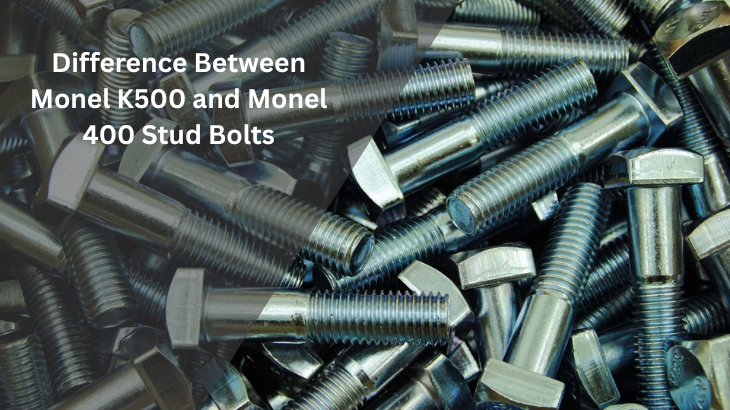
Nickel-copper alloys built the foundation of corrosion-resistant fastening for marine and offshore industries. Two grades dominate this space: Monel Alloy 400 Stud Bolts and Monel K500 Stud Bolts. Both start from the same nickel-copper base, roughly 63% nickel and 30% copper. But their strength profiles diverge sharply once titanium and aluminum enter the K500 formula. An engineer choosing between these two grades needs more than a material name. They need to know which alloy survives cyclic loading, which resists seawater longer, and which one costs less to specify at scale. This guide breaks down the real differences.
Why Stud Bolt Material Selection Matters in Critical Industries?
Stud bolts hold flanges, pumps, and pressure vessels together under constant mechanical stress. A single wrong material choice compromises joint integrity across an entire pipeline segment. Corrosion attacks threads first. Vibration loosens preload over months of operation. Pressure cycling fatigues the bolt shank until failure arrives without warning. Marine, chemical, and offshore environments push fasteners harder than almost any other application. Saltwater, sulfuric compounds, and constant motion demand alloys that resist pitting and stress corrosion cracking simultaneously. Nickel-copper alloys answer that demand because they combine passive oxide film formation with ductility that ordinary stainless steel cannot match in chloride-rich service.
Understanding Monel Alloy 400 Stud Bolts
Monel 400 alloy has served seawater and chemical processing equipment for decades. A stable nickel-copper matrix resists pitting even in stagnant saltwater, making it corrosion resistant. Toughness is maintained over a broad temperature range from sub-zero marine temperatures to moderate process heat. Monel Alloy 400 Stud Bolts are utilised extensively in seawater piping systems, heat exchangers and marine hardware where exposure to saltwater is constant. This grade is specified by chemical process plants for valves and pump casings for hydrofluoric acid and caustic solutions. Monel 400 is well suited for applications where corrosion resistance is the primary engineering requirement and mechanical loads are moderate, offering dependable, economical performance without the premium of age-hardened alternatives.
Understanding Monel K500 Stud Bolts
Monel K500 alloy starts with the same nickel-copper base as Monel 400. Then aluminum and titanium get added, roughly 2.5-3.5% aluminum and 0.35-0.85% titanium, before the alloy undergoes age-hardening. That heat treatment process precipitates fine intermetallic particles throughout the metal structure. The result is a stud bolt with far higher tensile strength and hardness than standard Monel 400. Age-hardening transforms a corrosion-resistant alloy into one that also resists mechanical deformation under sustained load. Offshore drilling equipment, propeller shafts, and high-pressure pump components rely on this combination. Any application demanding both saltwater resistance and structural strength under repeated stress points toward Monel K500 Stud Bolts rather than the standard grade.
Monel K500 vs Monel 400 Stud Bolts: Performance Comparison
Strength Under Load
Tensile strength separates these two grades most clearly. Monel 400 typically reaches 70,000-85,000 PSI tensile strength in annealed condition. Monel K500 pushes past 130,000-160,000 PSI after age-hardening. Yield strength follows the same pattern, with K500 nearly doubling the load-bearing threshold of standard 400. That difference matters directly in flange assemblies carrying high preload torque.
Hardness and Wear Resistance
Standard Monel 400 offers moderate hardness, typically around 110-150 Brinell. K500 age-hardens to 250-350 Brinell, a substantial jump. Moving equipment, valve stems, and high-stress threaded assemblies benefit from that added wear resistance since surface degradation under friction happens far slower.
Fatigue Performance
Cyclic loading breaks down standard alloys faster than static load ever will. Monel K500 handles repeated stress cycles with less crack propagation than Monel 400, a direct result of its finer grain structure from age-hardening. Offshore platforms and rotating equipment subject to vibration see fewer fatigue failures with K500 studs over equivalent service periods.
Corrosion Resistance
Both alloys perform nearly identically in standard seawater immersion. Neither pits significantly under normal marine exposure. The gap widens in aggressive settings, however. Hydrofluoric acid service and reducing acid environments still favor Monel 400 slightly, since some age-hardened alloys show marginally reduced resistance to stress corrosion cracking in specific chemical media.
Service Life Expectations
Monel 400 requires standard inspection cycles in typical marine service. K500 studs, given their fatigue advantage, often extend maintenance intervals in rotating or vibrating assemblies. Long-term operational costs favor K500 in high-cycle applications despite a higher upfront material cost.
| Property | Monel 400 | Monel K500 |
| Tensile Strength | Good | Higher |
| Yield Strength | Moderate | Higher |
| Hardness | Good | Excellent |
| Fatigue Resistance | Good | Superior |
| Corrosion Resistance | Excellent | Excellent |
Which Stud Bolt Performs Better in Different Applications?
Marine and Shipbuilding Systems
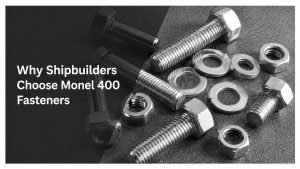
Monel 400 Stud Bolts remain the standard choice for seawater piping and hull hardware, since corrosion resistance outweighs strength requirements in most static marine fittings.
Offshore Oil & Gas Platforms
Monel K500 Stud Bolts handle the combined load of high pressure and corrosive splash-zone exposure better, thanks to superior tensile strength and fatigue resistance.
Chemical Processing Plants
Monel 400 Stud Bolts suit valves and reactors where aggressive chemical exposure, not mechanical load, drives the material decision.
Pumps, Valves, and Pressure Equipment
Monel K500 Stud Bolts support rotating shafts and high-torque flange connections where strength and wear resistance matter as much as corrosion protection.
Application context, not spec sheets alone, should guide the final material decision for each project.
Selection Guide: How to Choose the Right Monel Stud Bolt
Choose Monel Alloy 400 Stud Bolts When:
- Corrosion resistance is the primary concern
- Moderate mechanical loads are expected
- Cost efficiency is important for large-volume projects
Choose Monel K500 Stud Bolts When:
- High strength is required for structural connections
- Fatigue resistance is critical in cyclic-load equipment
- Equipment operates under demanding, high-vibration conditions
Conclusion
Monel 400 and Monel K500 Stud Bolts are nickel-copper-based but meet different engineering requirements. When value and corrosion resistance are the drivers, Monel 400 is the choice, especially in seawater and chemical service. Monel K500 offers greater strength, hardness, and fatigue resistance for high load and high vibration applications. Contact Vision Alloys for technical specifications and pricing for your stud bolt needs.