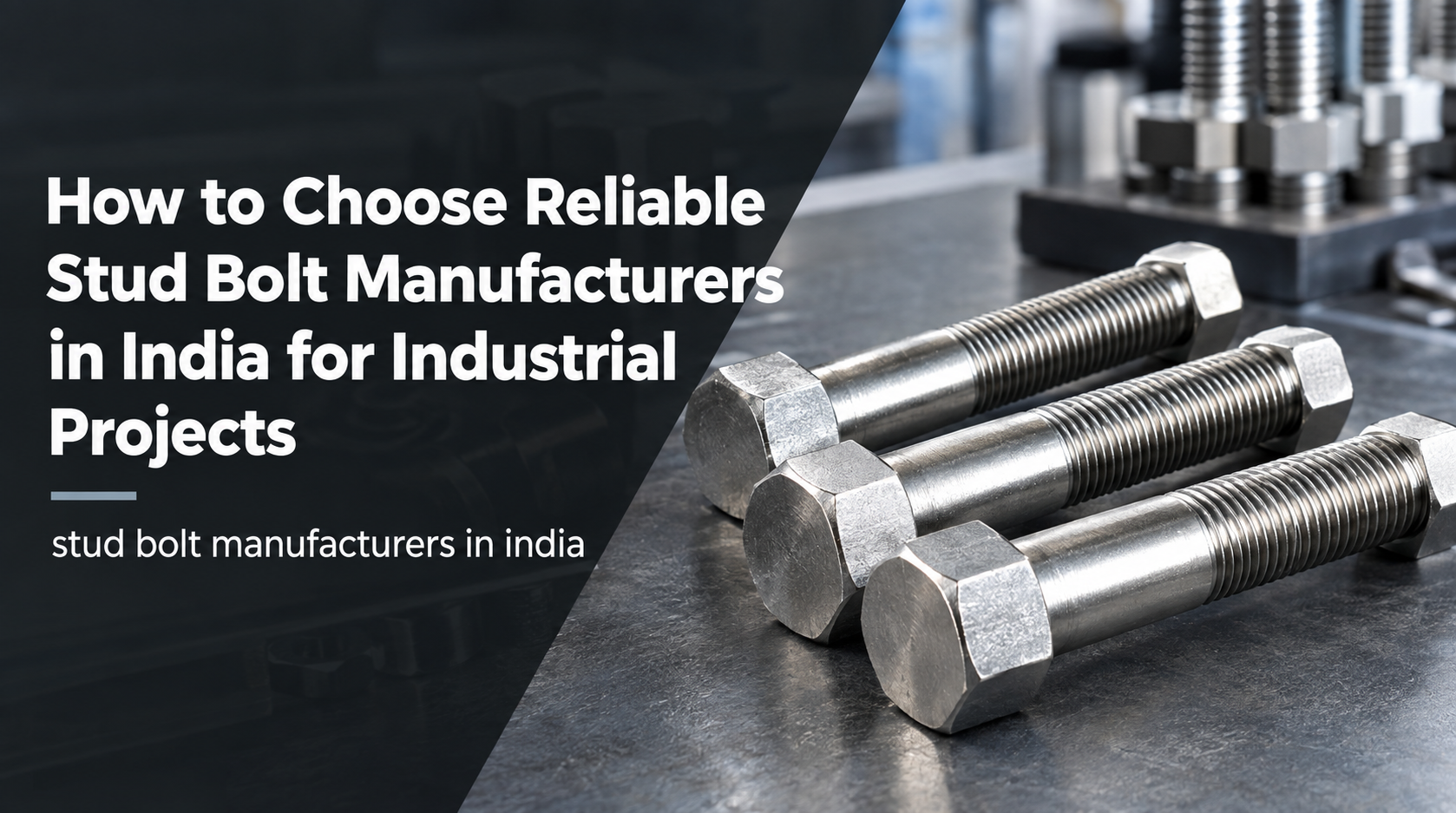
Industrial fastening depends on components that hold under pressure, vibration and temperature swings for years without failure. At the core of this are stud bolts, which hold together flange joints, pressure vessels and structural connections across process industries.
Choosing the correct stud bolt manufacturer determines if a joint can sustain its rated pressure for decades or if it needs replacing early. It is the material quality, dimensional accuracy and standards compliance that separates a supplier that can meet critical specifications from one that can’t. Oil and gas, petrochemical, power generation and heavy engineering sectors all depend on stud bolts built to precise tolerances.
What Are Stud Bolts?
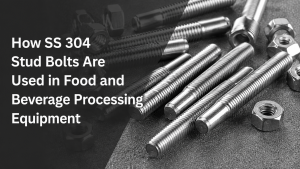
A stud bolt is a rod threaded on both ends, or along its full length, paired with two nuts to clamp two flanged surfaces together. Unlike a conventional bolt, it carries no head. This design spreads clamping load evenly across the joint face and lets nuts be torqued from either end during installation or maintenance. Flange connections depend on that even load distribution to hold a leak-tight seal under internal pressure. That property makes stud bolts the standard choice wherever flanges, valves, and pressure vessels need a joint that can be tightened and retightened without damaging the assembly.
Why Stud Bolt Quality Matters
A substandard stud bolt fails quietly until the joint it holds does not. Reliable fastening under pressure prevents flange leaks that can shut down a process line or release hazardous media. Vibration and heavy loads work threads loose over time; bolts made to consistent hardness and tensile specifications resist this loosening cycle for years rather than months. Heat cycling alters bolt preload and weakens poorly heat-treated material. Bolts that hold their preload through repeated thermal cycles extend service life and cut the frequency of shutdown-driven replacements.
Key Qualities of a Trusted Stud Bolt Manufacturer
Six factors separate manufacturers capable of supporting critical infrastructure from those that cannot: raw material quality, manufacturing precision, dimensional consistency, quality control rigor, standards compliance, and supply reliability.
| Selection Criteria | Why It Matters |
| Material Quality | Improves durability and corrosion resistance |
| Manufacturing Precision | Ensures proper fit and performance |
| Quality Inspection | Reduces installation failures |
| Standards Compliance | Meets industrial requirements |
| Delivery Capability | Supports project timelines |
Industries That Rely on Stud Bolts
Oil & Gas
Refineries and upstream facilities use stud bolts on flanges carrying high-pressure hydrocarbons. A loose or corroded bolt on a pipeline flange can trigger a leak with safety and environmental consequences.
Petrochemical Plants
Process units run continuously at elevated pressure and temperature, exposed to corrosive media. Stud bolts here need tensile strength and corrosion resistance to keep reactors sealed between turnarounds.
Power Generation
Boilers, turbines, and steam piping operate under cyclic thermal loads. Stud bolts that hold preload through heating and cooling cycles reduce unplanned outages.
Chemical Processing
Exposure to aggressive chemicals demands bolts resistant to pitting and stress corrosion cracking. Reliable fastening guards against leaks that could compromise product quality and worker safety.
Marine & Offshore
Saltwater exposure and constant vibration test corrosion resistance and fatigue strength together. Platforms and vessels need stud bolts rated for these combined conditions.
Heavy Engineering & Construction
Structural assemblies, cranes, and heavy machinery rely on stud bolts to transfer load safely across joints. Dimensional accuracy affects assembly alignment and structural performance.
Materials Commonly Used for Manufacturing Stud Bolts
Stainless steel, carbon steel, alloy steel, and high-temperature alloys each suit different operating environments. Stainless steel resists corrosion in chemical and marine settings. Carbon steel handles general industrial service where cost efficiency outweighs corrosion exposure. Alloy steel adds strength for high-pressure applications, and high-temperature alloys hold their mechanical properties where heat would degrade standard steel. Material selection depends on the specific combination of pressure, temperature, and media a plant expects to encounter, not on a fixed rule applied across every installation.
How Leading Stud Bolt Manufacturers Ensure Quality
Quality begins with material traceability, tracking each batch back to its source certification before production. Precision machining brings threads and dimensions within tight tolerances. Dimensional inspection confirms every bolt matches specification, while mechanical testing verifies tensile strength and hardness against the required grade. Surface finish inspection catches defects that could initiate corrosion or fatigue cracking, and a final check before dispatch confirms the batch is ready for installation.
How to Choose the Right Stud Bolt Manufacturer in India
Industry experience shows a manufacturer has handled the pressure, temperature, and material combinations relevant to a given project before. Product quality consistency across orders matters as much as the first sample, since one inconsistent batch can compromise an installation. Conformance with international standards, responsive technical support, and the ability to handle custom and bulk orders separate dependable suppliers from the rest. On-time delivery keeps project schedules intact, particularly during turnarounds where downtime carries a direct cost. Vision Alloys operates as a stud bolt manufacturer in India built around these requirements.
Conclusion
The manufacturer behind a stud bolt determines how that joint performs for the life of the plant. Poor material choice or inconsistent machining shows up later, in the form of leaks, unplanned shutdowns, or safety incidents. Reliable manufacturing, backed by material traceability and standards compliance, keeps critical joints sealed through years of thermal cycling, vibration, and pressure loading. Explore the stud bolt range at visionalloys.com and contact the technical team to discuss specifications for your next project.